Building Artificial Nests for Endangered Hornbill Species in Thailand
Donations for the project will build artificial nests to endangered hornbill species10nests
Period of time
Dec 30, 2025 - Jun 30, 2026Location
SDG Goals
Beneficiary groups of the project
Homes for Hornbills is a youth-led conservation project that addresses the critical shortage of natural nesting cavities for hornbills in Thailand. Currently, 10 out of 13 hornbill species in Thailand are classified as threatened or endangered due to deforestation, human disturbance, and poaching.
Unlike many birds, hornbills cannot build their own nests. They rely entirely on natural cavities during the breeding season to lay eggs and raise their chicks until they are ready to fledge. Today, suitable nesting cavities are extremely rare or no longer appropriate for hornbill use. Additionally, competition among multiple species for these cavities is immensely high.
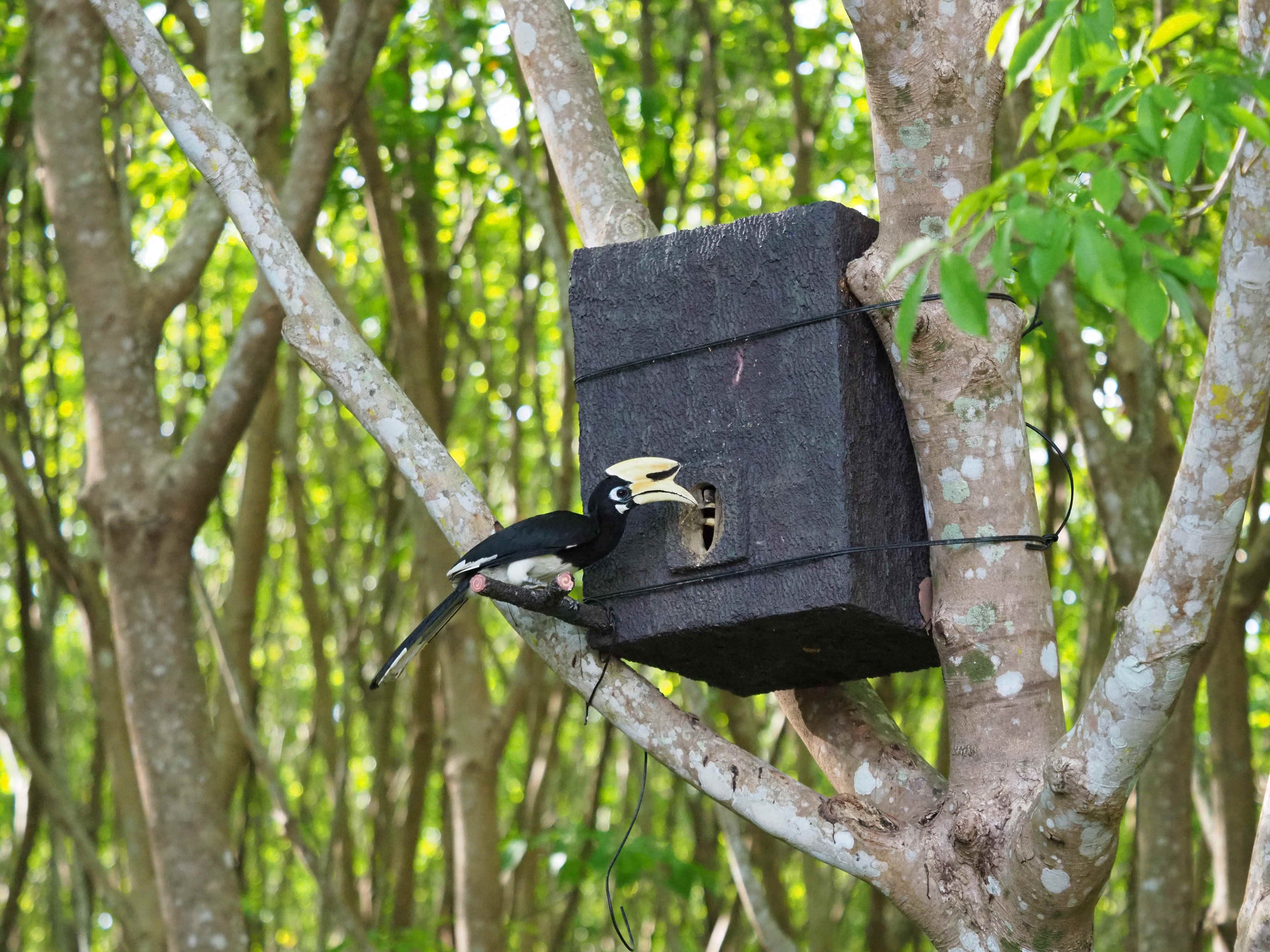
To address this issue, the project has developed a new generation of artificial hornbill nests that are strong, safe, and environmentally friendly, made from hemp fiber and resin upcycled from recycled plastic bottles. This approach not only provides long-lasting nesting habitats for hornbills but also helps reduce plastic waste through upcycling.
The project plans to construct 10 large artificial nests for installation in forest areas to support the large, endangered hornbill species, such as the Helmeted Hornbill and the Rhinoceros Hornbill. Homes for Hornbills works closely with local communities, researchers, and park rangers to monitor nest use and collect conservation data.
These innovative artificial nests aim to increase hornbill breeding success and create a broader, long-term impact on the biodiversity and ecological health of Thailand’s forests.
Social issues
Due to the current situation in Thailand, large continuous forest areas have been fragmented into small, scattered forest patches across the country. This fragmentation has significantly affected both plant and animal communities in tropical forests. Such changes have led to a serious decline in Thailand’s forest resources, leaving only about 15% of the country’s land area as relatively intact forest. This loss is closely linked to the reduction of suitable habitats for hornbills. Research conducted by the Thailand Hornbill Research Foundation shows that suitable hornbill habitats have been declining rapidly and continuously each year, posing a severe long-term threat to hornbill population survival.
Hornbills are large birds that play a vital role in forest ecosystems and are often referred to as the “farmers of the forest.” They consume fruits from more than 100 plant species, helping disperse seeds and regenerate degraded forest areas. Hornbills also act as predators, helping regulate prey populations and maintain ecological balance. Due to ongoing threats to tropical forests, hornbills in Thailand are now classified as threatened or endangered at both national and global levels. Conserving hornbills is therefore critically important and directly contributes to the protection and restoration of forest ecosystem health.
Most importantly, hornbills cannot build their own nests. They rely on old tree cavities with very specific dimensions. As large trees disappear, suitable nesting cavities have become extremely rare, preventing hornbills from reproducing and causing their populations to decline continuously. In the past, various artificial nesting solutions have been used, including wooden nests, earthen jars, and fiberglass nests, each with significant limitations:
-
Wooden nests last only 2–3 years and require cutting trees.
-
Earthen jars' dimensions limit hornbill chicks’ ability to practice wing movement.
-
Fiberglass nests degrade over time, producing sharp fibers that can harm the birds.
This challenge underscores the urgent need for a nesting solution that is durable, safe, and sustainable.
Approaches to addressing issues
Homes for Hornbills has developed an innovative artificial nesting system for hornbills using six layers of hemp fiber and resin, which has been tested to be both durable and safe for wildlife. The key features of this nest design include: - Strength and durability comparable to fiberglass, but significantly safer for hornbills - Use of natural and low-carbon materials - A structure that closely mimics natural tree cavities, allowing chicks to move freely and learn to fly properly - High resistance to tropical weather conditions This innovation has already been tested and implemented in real conservation settings. In 2025, the project installed 20 artificial nests in hornbill conservation areas on Yao Noi Island, Ko Yao District, Phang Nga Province. Ten of these nests were successfully occupied by Oriental Pied Hornbills, resulting in a total of 14 chicks fledged, demonstrating that the innovation is effective, safe, and significantly improves hornbill breeding success. Building on this success, the new phase of the project will expand the impact by installing 10 large-sized artificial nests in protected forest areas, such as Budo–Su-ngai Padi National Park in Narathiwat Province. These nests are designed to support critically endangered hornbill species, including the Helmeted Hornbill (a protected species in Thailand) and endangered species such as the Rhinoceros Hornbill, increasing their opportunities for successful reproduction and long-term survival.
Operational Plan
Feb 2026 - Apr 2025
Company will produce the mold for the artificial hornbill nests.
May 2026
Conduct quality control, strength testing, and prepare installation equipment.
Jun 2026
Transport the artificial nests to the designated conservation areas.
Jul - Nov 2569
Install the artificial nests before the next breeding season.
Aug 2026 - Dec 2025
Train local communities and students on nest monitoring and hornbill conservation.
Jan 2027 - Jun 2025
Monitor nest usage in collaboration with researchers, collecting data on nest occupancy, chick production, and overall nesting success.
Budget Plan
| Item | Quantity | Amount (THB) |
|---|---|---|
| Artificial Nest 25,000 baht per nest | 10nest | 250,000.00 |
| Transportation costs to installation sites | 1N/A | 20,000.00 |
| Installation costs tree-climbing equipment and safety gear | 1N/A | 40,000.00 |
| Community training and educational materials | 1N/A | 10,000.00 |
| Travel expenses for monitoring and data collection | 1N/A | 25,000.00 |
| Miscellaneous expenses | 1N/A | 5,000.00 |
| Total Amount | 350,000.00 | |
| Taejai support fee (10%) | 35,000.00 | |
Project manager
Homes for Hornbills
Homes for Hornbills เป็นโครงการอนุรักษ์นกเงือกของไทยที่เริ่มต้นโดย น.ส.ญาณินท์ ตั้งคารวคุณ เยาวชนไทยอายุ 17 ปี ศึกษาอยู่ชั้นเกรด 11 โรงเรียน Choate Rosemary Hall รัฐ Connecticut ประเทศสหรัฐอเมริกา โดยความสนใจด้านการอนุรักษ์นกเงือกเริ่มต้นตั้งแต่สมัยประถมจากการไปทัศนศึกษาที่อุทยานแห่งชาติเขาใหญ่ ซึ่งทำให้ญาณินท์ได้เรียนรู้ว่านกเงือกมีบทบาทสำคัญในฐานะ “นักปลูกป่า” หรือผู้กระจายเมล็ดพันธุ์พืชที่ช่วยรักษาความอุดมสมบูรณ์ของป่าไม้ เมื่อเติบโตขึ้นและได้เรียนรู้ว่านกเงือกในประเทศไทยกำลังลดจำนวนลงอย่างรวดเร็วจากการตัดไม้ทำลายป่าและการขาดแคลนโพรงรัง ในปี 2024 ญาณินท์จึงได้ทำงานร่วมกับมูลนิธิศึกษาวิจัยนกเงือก และพัฒนาโครงการ Homes for Hornbills เพื่อออกแบบและติดตั้งโพรงรังนกเงือกเทียมที่ปลอดภัย ยั่งยืน และเหมาะสมกับนกเงือกในธรรมชาติ
View ProfileCreate a fundraising page
Collaborate to fundraise in support of this project
Create a fundraising page